July 28, 2012
The Olympic Intervention IV and the Laney Chouest have arrived at the test site for the simulated well blowout containment drill. Two BSEE inspection teams are aboard the vessels; the total of four inspectors have more than 43 years of offshore oil and gas experience. The inspectors are witnessing the deployment activities at the offshore location, verifying that the approved procedures are being followed, and monitoring operations for safe practices.
Personnel on both vessels are involved in the deployment as teams begin the procedures to lower the 100-ton capping stack and the associated equipment to the parking pile which simulates a blowout well.
BSEE Director Jim Watson is overseeing operations from the Unified Command as BSEE engineers evaluate procedures for the subsea pressure tests that will occur after the capping stack has been successfully lowered and connected to the parking pile (simulated well head) on the ocean floor.This exercise involves the mobilization and field deployment of the capping stack to the sea floor in approximately 7,000 feet of water, latching it to a test wellhead, and pressurizing the system. The capping stack is a critical piece of equipment that has the ability to shut off any flow of oil from a well if other shut-off systems, such as the blowout preventer (BOP) fail. Following the Deepwater Horizon tragedy, the Department of the Interior instituted reforms that required offshore operators to have the ability to deploy containment resources, such as a capping stack, in response to a blowout or other loss of well control. For more information about post-Deepwater Horizon reforms, please visit our reforms page here.
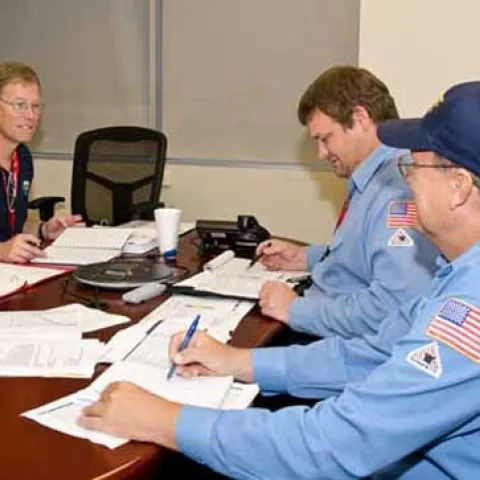
BSEE Director James A. Watson confers with BSEE inspectors about exercise procedures.